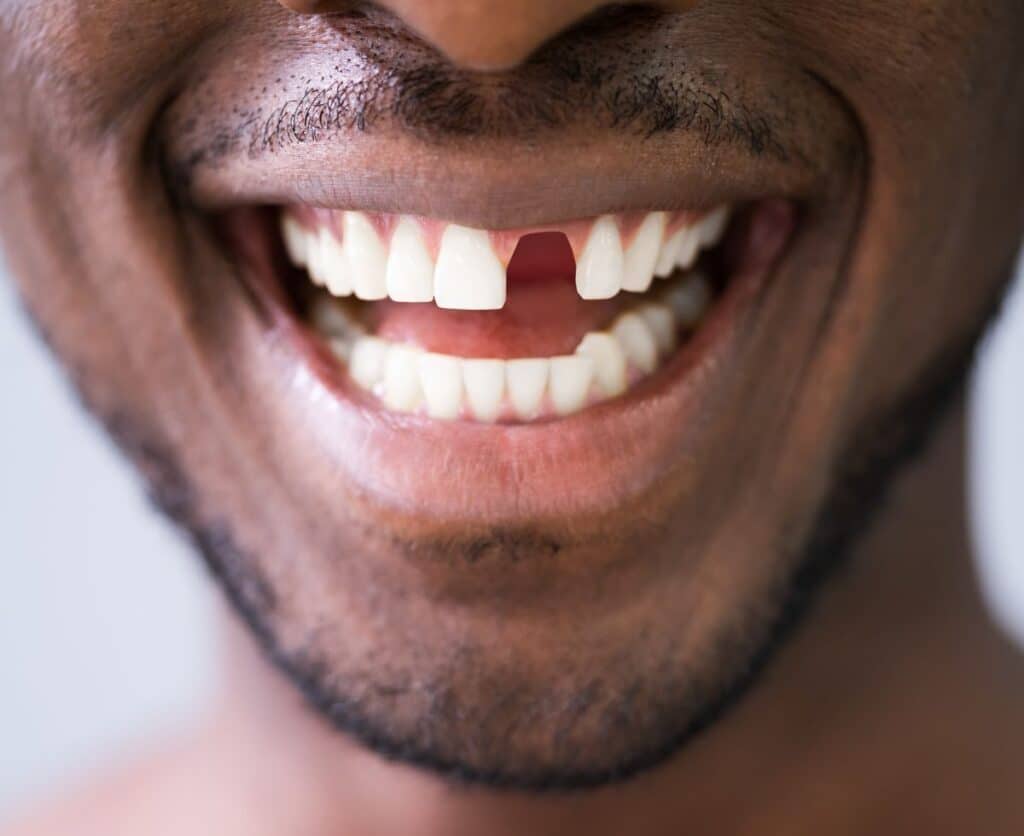
Short answer: The most lasting way to replace one missing tooth is usually a dental implant with a ceramic crown: it looks and works like a natural tooth and leaves the teeth beside it untouched. A single implant typically costs $3,000 to $5,000, and the process takes about 3 to 6 months including healing, longer if the tooth must come out and the bone heal first. If you would rather avoid surgery, a fixed bridge or a removable partial denture can fill the gap. At Hastings Dental Center in Vancouver, the dentist examines the area and takes X-rays first, then explains which option suits you.
Your Complete Guide to Single Tooth Replacement with Dental Implants
Benefits of an all-ceramic crown on implant:
When both the tooth and root are damaged, the best permanent replacement is a dental implant in Vancouver, in conjunction with a ceramic crown. This solution both looks and functions just like a natural tooth.
In this case, a so-called one-piece implant is used. This means that all components are installed as a single unit, resulting in immediate full-functioning teeth, shorter treatment time, and minimized pain.
- Immediately functioning teeth
- Excellent esthetic result
- Life long, stable solution
Treatment:
This procedure normally includes four visits to the dentist. You can expect to be able to work the day after the implant is installed.
Single Tooth Replacement Treatment: Step-by-Step Guide
INSTALLING THE NEW TOOTH – STEP-BY-STEP
The course of treatment described here is one of several options available. Consult your dentist to find out what the best solution is for you, given your specific condition.

|

|
| 1: Before the procedure The dentist makes a first examination and takes one or more X-rays of the area to prepare for the procedure. |
2: Installing the implant THe implant is installed. At this time, a temporary tooth is provided, allowing you to eat and function normally almost immediately. The implant will need a few months to integrate with the jawbone before the next step is taken. |

|

|
| 3: Attaching the new crown The final step is the placement of the permanent ceramic tooth. The new tooth is installed for life. No additional treatment is needed. |
4: End result You should expect the new tooth to fit and function just like a natural tooth. Do your usual dental hygiene to keep the tooth and gum around it clean and healthy. |
Video: what getting a dental implant is really like
One patient's timeline: the tooth comes out and the bone heals first, the implant goes in at about month 6 and the crown is attached at about month 10. The extraction week is usually the hardest part; the implant surgery itself often heals quickly.
ALTERNATIVES TO AN ALL-CERAMIC CROWN ON IMPLANT

|
Tooth-supported fixed bridge A traditional bridge involves grinding down adjacent teeth to support the bridge. It is a stable solution with good esthetics and function that is fairly easy to install. However, this alternative has two main disadvantages: continuous bone resorption in the edentulous area and sacrificing healthy teeth in the name of the bridge. |

|
Removable partial denture This is not a permanent alternative to a lost tooth. It is unstable and loosely attached, which affects both function and comfort. A removable partial denture is made of plastic – a material that can’t create the same esthetic result as a ceramic crown. The benefits are few but do exist: adjacent teeth aren’t affected. It is easily and quickly installed and relatively cheap. |

|
Resin-bonded bridge This alternative has several clear advantages: it is quickly installed, functions well, and, since it is made of ceramic, it yields a high aesthetic result. Moreover, natural, healthy teeth are unaffected. But it is not very permanent. The resin-bonded bridge will eventually come off – probably after just a couple of years – and will then have to be reinstalled. |
Why Is Replacing a Single Tooth Important?
When you lose a tooth and don’t replace it, the nearby teeth can start to shift into that space. This can throw off your bite, make chewing difficult, and even lead to jaw pain. Additionally, the jawbone where the tooth used to be can begin to weaken without the stimulation it requires. Replacing a single tooth promptly helps maintain your jawbone strength, keep your teeth aligned, and preserve your facial structure.
Common Options for Single Tooth Replacement
1. Dental Implants
Dental implants are often seen as the gold standard for replacing a single tooth. This procedure involves surgically inserting a titanium post into the jawbone, which serves as a solid root replacement. After healing, a custom-made crown is attached to the implant, providing you with a tooth that looks natural, is durable, and functions just like a natural one. Implants also help prevent bone loss and don’t require altering the nearby teeth.
Advantages:
– Long-lasting and stable
– Preserves jawbone and facial structure
– Feels and functions like a natural tooth
2. Dental Bridges
A dental bridge fills the gap left by a missing tooth by anchoring a false tooth to the healthy teeth next to it using crowns. This option is less invasive than implants and can often be done more quickly. However, it does involve reshaping the adjacent teeth to support the bridge.
Advantages:
– Faster treatment process
– Generally less expensive upfront than implants
Disadvantages:
– Requires altering healthy adjacent teeth
– May increase the risk of tooth decay or damage to supporting teeth
3. Removable Partial Dentures
A removable partial denture is a less permanent, non-invasive option that features a prosthetic tooth attached to a gum-colored base. It clips onto the surrounding teeth and can be taken out for cleaning. While this solution is often more budget-friendly, it tends to be less stable compared to implants and bridges.
Advantages:
– Cost-effective
– Non-surgical and easy to adjust
Disadvantages:

– Less comfortable and stable
– Needs daily removal and cleaning
Choosing the right method for replacing a single tooth can be a bit tricky, as it depends on several key factors, including your oral health, the condition of your jawbone, your budget, and your personal preferences. Many people opt for dental implants because they last a long time and feel natural; however, not everyone is a suitable candidate—especially if there is bone loss or certain health issues. On the other hand, bridges can be a faster, non-surgical option, though they do require altering some healthy teeth. If you’re looking for a more temporary or budget-friendly option, removable partial dentures may be the best choice.
Researching implants? Our articles cover the different types of dental implants, 7 benefits of a dental implant, when a bone graft is needed before an implant and common dental implant problems and how to overcome them.
Hastings Dental in Vancouver, BC: Single Tooth Replacement Expertise for a Complete Smile
Hastings Dental Vancouver provides comprehensive single-tooth replacement services. Our team of experienced dentists leverages advanced technology to develop personalized treatment plans, ensuring a natural aesthetic and optimal functionality for your restored smile. Schedule a consultation today to discuss your options.
Will I Have a Gap While My Implant Heals?
Usually not for long. With the one-piece implant described above, a temporary tooth is fitted when the implant is placed, so you can eat and function normally almost immediately, and you can expect to be able to work the day after. The implant then needs a few months to fuse with the jawbone before your permanent ceramic crown is attached. If the tooth still has to be removed, the bone is often left to heal first, as in the patient timeline in the video above.
Does the Canadian Dental Care Plan (CDCP) Cover Single Tooth Replacement?
The services the CDCP lists as covered do not include dental implants or fixed bridges. It does list partial dentures (with preauthorization) among the services that replace missing teeth, and crowns (with preauthorization). At Hastings Dental Center, CDCP members get no-gap billing for eligible covered treatment, so you are not billed the difference between the CDCP fee and our fee; any co-payment depends on family income. For an implant, many private dental plans pay part of the cost, and financing is available through iFinance Canada.
Missing a tooth? Book a single tooth replacement consultation in East Vancouver: call (604) 251-5993 or book online. Hastings Dental Center, 2420 East Hastings Street, is open Thursdays until 7 pm and Saturdays 9:30 am to 4 pm, and walk-ins are welcome.
Frequently Asked Questions About Single-Tooth
1. How much does a single tooth implant cost?
The average price typically ranges from $3,000 to $5,000, depending on the location and the complexity of the procedure.
2. How long does it take to get a dental implant for one tooth?
Generally, the whole process takes about 3 to 6 months, which includes the healing period.
3. Is a dental implant better than a dental bridge?
Absolutely! Implants help preserve bone and don’t harm the neighboring teeth, making them a more durable option.
4. Can I replace a single missing tooth without surgery?
Yes, you can use dental bridges or removable partial dentures to replace a tooth without the need for surgery.
5. How long does a dental bridge last?
On average, dental bridges can last between 5 and 15 years if proper care is taken.
6. Will my insurance cover single tooth replacement?
Many dental insurance plans cover part of the cost, but the level of coverage can vary significantly.
7. Can I get an implant if I have bone loss?
Yes, bone grafting procedures can often prepare the area for an implant, even if there’s some bone loss.
8. How do I care for a single tooth implant?
Make sure to brush and floss regularly, and don’t forget to visit your dentist for routine checkups to keep your implant in good shape.
9. Are removable partial dentures comfortable?
They might take a little getting used to, but they offer a non-invasive way to replace a missing tooth.
10. Can a single tooth replacement improve my speech?
Definitely! Replacing missing teeth can enhance your speech clarity and help prevent slurring.