Immediate vs. Conventional Dentures: Which is Right for You?
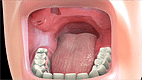
A denture is a removable dental appliance replacement for missing teeth and surrounding tissue. Denture clinics specialize in creating these appliances to closely resemble your natural teeth and may even enhance your smile.
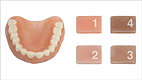
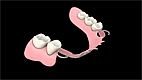
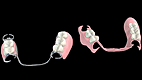
There are two types of dentures – complete and partial dentures. Complete dentures are used when all of the teeth are missing, while partial dentures are used when some natural teeth remain. A Partial denture not only fills in the spaces created by missing teeth, it prevents other teeth from shifting.
A Complete denture may be either “conventional” or “immediate”. A conventional type is made after the teeth have been removed and the gum tissue has healed, usually taking 4 to 6 weeks. During this time the patient will go without teeth. Immediate dentures are made in advance and immediately placed after the teeth are removed, thus preventing the patient from having to be without teeth during the healing process. Once the tissues shrink and heal, adjustments will have to be made.
Dentures are very durable appliances and will last many years, but may have to be remade, repaired, or readjusted due to normal wear.
Reasons for dentures:
-
Complete Denture – Loss of all teeth in an arch.
-
Partial Denture – Loss of several teeth in an arch.
-
Enhancing smile and facial tissues.
-
Improving chewing, speech, and digestion.
Denture Clinics and the Process of Getting Dentures
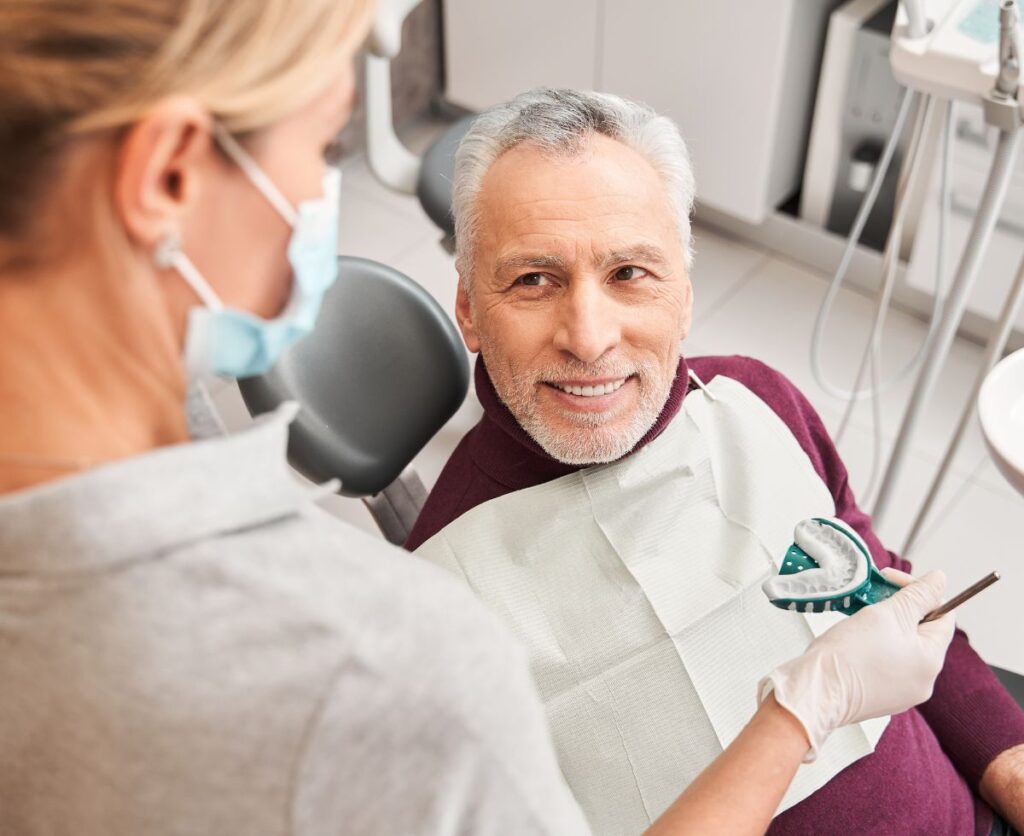
The process of obtaining dentures typically involves multiple appointments spanning several weeks at denture clinics. Highly accurate impressions and measurements are taken during these visits to craft your personalized denture. Several “try-in” sessions might be needed to ensure the denture’s shape, color, and fit are just right. During the final appointment at the denture clinic, your dentist will meticulously adjust and place the finished denture, ensuring it feels natural and comfortable.
It is common to experience increased saliva flow, some soreness, and potential speech and chewing challenges initially, but these issues typically diminish as your muscles and tissues acclimate to the new dentures.
You will be given care instructions for your new dentures. Proper cleaning of your new dental appliance, good oral hygiene, and regular dental visits will aid in the life of your new dentures.
For day-to-day care, see 5 tips for taking care of your dentures and tips for keeping your dentures clean. Weighing a more stable option? Compare dental implants vs dentures or read about an implant-supported denture.
Your Trusted Denture Clinic in Vancouver
At Hastings Dental in Vancouver, BC, our dedicated denture specialists provide exceptional dental dentures services, including implant dentures, at our state-of-the-art clinic. Whether you’re in need of complete dentures, partial dentures, or implant-supported options, we offer personalized care and precise fittings to restore your smile and oral health. Our denture clinic prioritizes comfort and functionality, using advanced techniques and high-quality materials to ensure natural-looking and durable results.

Contact us today to schedule a consultation and discover the difference our expertise can make for your dental health and overall well-being.
Looking for a denture specialist near you in East Vancouver?
In BC, dentures are made by dentists and by denturists. At Hastings Dental Center, the dentist examines your mouth, takes the impressions, checks the fit at each try-in and places and adjusts the finished denture, in the same East Hastings clinic that handles your checkups and, when you want a firmer hold, implant-supported dentures. One clinic from the first exam to the last adjustment.
How long does it take to get dentures in Vancouver?
It depends on whether teeth still need to come out. A conventional complete denture is made once the gums have healed, which usually takes 4 to 6 weeks after extractions. An immediate denture is made ahead of time and placed on the day the teeth are removed, so you are never without teeth; it is adjusted as the gums settle. A partial denture for a few missing teeth also takes several visits for impressions and try-ins.
Do the CDCP or dental insurance cover dentures?
The Canadian Dental Care Plan lists complete and partial dentures among its covered services for eligible patients. With our no-gap CDCP billing, you are not billed the difference between the CDCP fee and ours for eligible covered treatment; any co-payment is set by your family income. Many workplace plans also pay part of a denture, and our team can check your benefits. Financing is available through iFinance Canada.
Denture questions we hear often
How long do dentures last, and when should they be replaced?
Dentures last many years, but your gums and jawbone slowly change shape, so a denture needs adjusting or relining from time to time and is eventually remade. Have a loose, sore or cracked denture checked, and see the dentist at least once a year.
How long does it take to get used to new dentures?
Give it some time. More saliva, some soreness and a change in how you chew and speak are normal at first and ease as your mouth adjusts. If a sore spot does not settle, call us so the fit can be adjusted.
How do I clean my dentures, and should I take them out at night?
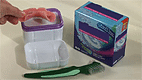
Yes, take them out overnight to rest your gums. Brush the denture every day, then soak it in warm water, with or without a denture cleanser. Never use hot water, and use plain warm water for partials with metal clasps. Out of the mouth, keep them in water so they do not dry out or warp. See our denture cleaning tips.
Can I switch to implant-supported dentures later?
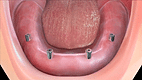
Yes. An overdenture attaches to small implants placed in the jawbone, so it holds more firmly than a denture resting on the gums. At a consultation the dentist checks whether implants suit you. Read about implant-supported dentures.
Does the CDCP need pre-approval for dentures?
Canada.ca lists standard and temporary complete dentures, and denture repairs, relines and rebases, without pre-authorization. Immediate complete dentures, overdentures and partial dentures need it: your provider recommends the treatment and the CDCP confirms coverage before the work starts.
Book a denture consultation: call (604) 251-5993 or book online. We are at 2420 East Hastings Street, Vancouver, open Monday 11 am to 4 pm, Tuesday, Wednesday and Friday 9:30 am to 5:30 pm, Thursday 11 am to 7 pm and Saturday 9:30 am to 4 pm.