A Sign of Receding Gums That Needs Attention
Why are my gums receding, and what can I do about it? The causes we find most often at Hastings Dental Center (2420 East Hastings Street, Vancouver) are brushing too hard, poor oral hygiene, teeth moved too fast in orthodontic treatment, and clenching or grinding. Lost gum does not regrow, but treating the cause stops the damage, and a gum graft can cover exposed roots. Book a gum check on (604) 251-5993.
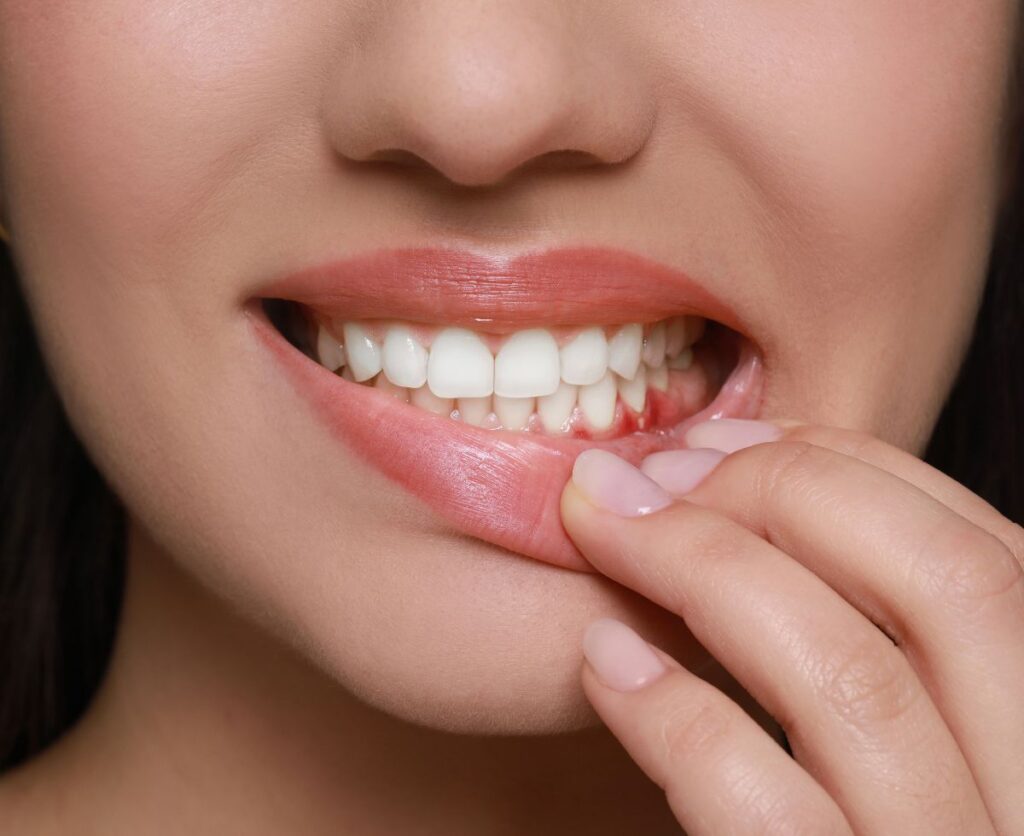
Gingival recession, better known as receding gums, is the slow, progressive loss of gum tissue from around a tooth. Left untreated, it ends in tooth root exposure: part of the root, which the gum should cover, is laid bare. It shows up most in adults over the age of 40, yet the process may start while a person is still in their teenage years.
Gum recession in its early stages is hard to self-diagnose. It develops gradually and often asymptomatically, so many people first notice it only when a root shows. Regular dental checkups find it sooner: at each visit the dentist looks along the gum line around every tooth and reviews your risk factors, which helps prevent gum recession before it starts.
Symptoms that can be indicative of gingival recession include:
- Sensitive teeth: once the gum pulls back far enough to uncover the cementum over the root, the dentin tubules underneath react more to external stimuli, which can make hot and cold food and drink uncomfortable.
- Visible roots: root surface showing below the crown of a tooth is one of the main marks of a more severe case.
- Longer-looking teeth: the teeth are their normal length; it is the missing gum tissue that makes them look longer and gives a toothy smile.
- Halitosis, inflammation and bleeding: bad breath and red, bleeding gums point to gingivitis or periodontal disease, a bacterial infection that makes gums recede from the teeth and, if not treated promptly, can end in tooth loss. Our periodontal disease page explains how it progresses.
Accurately Identifying the Root Cause of Gum Recession
Gum recession is incredibly widespread, and dentists diagnose and treat it on a daily basis. What matters is why it is happening in your mouth. So the affected areas are examined thoroughly first, to reach an accurate diagnosis of the underlying problem. With that cause known, nonsurgical and surgical procedures can halt the progress of the recession and keep it from returning in the future.
Gingival recession most often comes from one of four common causes:
- Overaggressive brushing: overbrushing can hurt gums almost as much as too little brushing. Scrubbing hard, or using a hard-bristled toothbrush, can erode tooth enamel at the gum line and can irritate or inflame the gum tissue. Our page on brushing and flossing technique shows a gentler way.
- Poor oral hygiene: skipped or rushed brushing and flossing let a plaque buildup form on the teeth. That plaque carries bacterial toxins, which promote infection and can erode the jawbone underneath.
- Chewing tobacco: tobacco use in any form is devastating for the entire oral cavity. Held against the gums day after day, chewing tobacco aggravates the gingival lining in that spot, and used continuously it leads to gum recession there.
- Periodontal disease: gum disease can follow poor oral hygiene or come with systemic diseases such as diabetes. In diabetes, excess sugar in the saliva and narrowed blood vessels give oral bacteria a perfect environment. The infection they cause works its way deeper into the gum and the bone tissue until, eventually, it ends in tooth loss. Read more on periodontal disease and diabetes.
Two more causes of gum recession come up often in our chair at Hastings Dental Center: clenching or grinding, which puts heavy force on the gums and bone (see bruxism), and teeth that were moved too fast during orthodontic treatment.
Choosing the Best Treatment for Receding Gums
Every mouth is different, which is why many treatments are available for receding gums. Whatever caused the recession to begin with is always addressed first.
Matching the treatment to the cause:
- Brushing damage: where overly aggressive brushing is eroding the gums, change to a softer toothbrush and learn a gentler brushing technique, and the gums stop being worn down.
- Plaque and poor hygiene: prophylaxis, a professional dental cleaning, clears debris and bacteria out of the gum pockets.
- Heavy tartar: where calculus (tartar) build-up is severe, scaling and root planing is performed to clean the teeth below the gum line so the gingival inflammation can heal.
- Grinding: a custom night guard worn while you sleep protects the teeth and gums from the force.
With the cause under control, the dentist may recommend surgery to repair the gum, for cosmetic or restorative reasons. For bringing back natural symmetry along the gum line and a smile that is more aesthetically pleasing, gum grafting and gum tissue regeneration (see regenerative procedures) are two excellent options. A graft either covers an exposed root or thickens thin gum so that no more is lost.

Can receded gums grow back?
No, gum tissue lost to gingival recession will not regrow by itself. What you can change is whether more is lost: gentle brushing, regular cleanings and treatment of any gum disease stop further recession, ease symptoms such as sensitive roots and can improve how firmly the gum attaches to the tooth. Where a root is already exposed, a graft is the way to cover it. Gum recession caught early usually needs the simplest fix, while untreated recession eventually exposes more root.
Is gum recession treatment covered by the CDCP?
Gum (periodontal) care is part of what the Canadian Dental Care Plan covers, as are the exams, x-rays and cleanings that pick up recession early. Hastings Dental Center bills the CDCP with no gap: for eligible covered treatment, the plan fee is our full fee, so you pay at most your income-based co-payment. Before a graft or any other treatment, we help you check what your plan pays; our CDCP page explains who qualifies. For care a plan does not cover, monthly payments are available through iFinance.
Where can I get gum recession treatment in East Vancouver?
Our clinic, Hastings Dental Center, sits at 2420 East Hastings Street in Vancouver, and patients come to us from across East Vancouver and Burnaby. Opening hours are 9:30 to 5:30 on Tuesday, Wednesday and Friday, 11 to 4 on Monday, 11 to 7 on Thursday and 9:30 to 4 on Saturday, with no Sunday hours. Walk-ins are welcome. To schedule a gum assessment, call (604) 251-5993 or reach us through our contact page. Still deciding? Read are bleeding gums a sign of gum disease and how to prevent gum disease.
Get Expert Gum Recession Treatment in Vancouver
At Hastings Dental Center, we specialize in diagnosing and treating receding gums for our Vancouver patients. Gum recession, often caused by gingivitis, aggressive brushing, or poor oral hygiene, can lead to tooth root exposure if left untreated. Our team provides personalized gum recession therapies and effective remedies to address symptoms such as sensitive teeth and visible roots. With advanced gum recession treatments, we help maintain your oral health and restore your smile’s aesthetics.
Video: how to stop gum recession getting worse
Gum tissue does not grow back on its own, but gentle brushing with a soft brush, regular cleanings and a custom night guard if you grind can stop the damage, and gum grafting can cover exposed roots again. The earlier it is treated, the simpler it is.
Ready to reclaim a healthy, confident smile? Schedule an appointment today to discuss your gum recession concerns and explore personalized treatment options.