The Importance of Wisdom Teeth Removal for Oral Health
Third molars, commonly referred to as wisdom teeth, are usually the last four of 32 teeth to erupt (surface) in the mouth, generally making their appearance between the ages of 17 to 25. They are located at the back of the mouth (top and bottom), near the entrance to the throat. The term “wisdom” stems from the idea that the molars surface at a time typically associated with increased maturity or “wisdom”. If you experience discomfort or pain due to your wisdom teeth, it may be necessary to consider wisdom teeth removal to alleviate any issues.
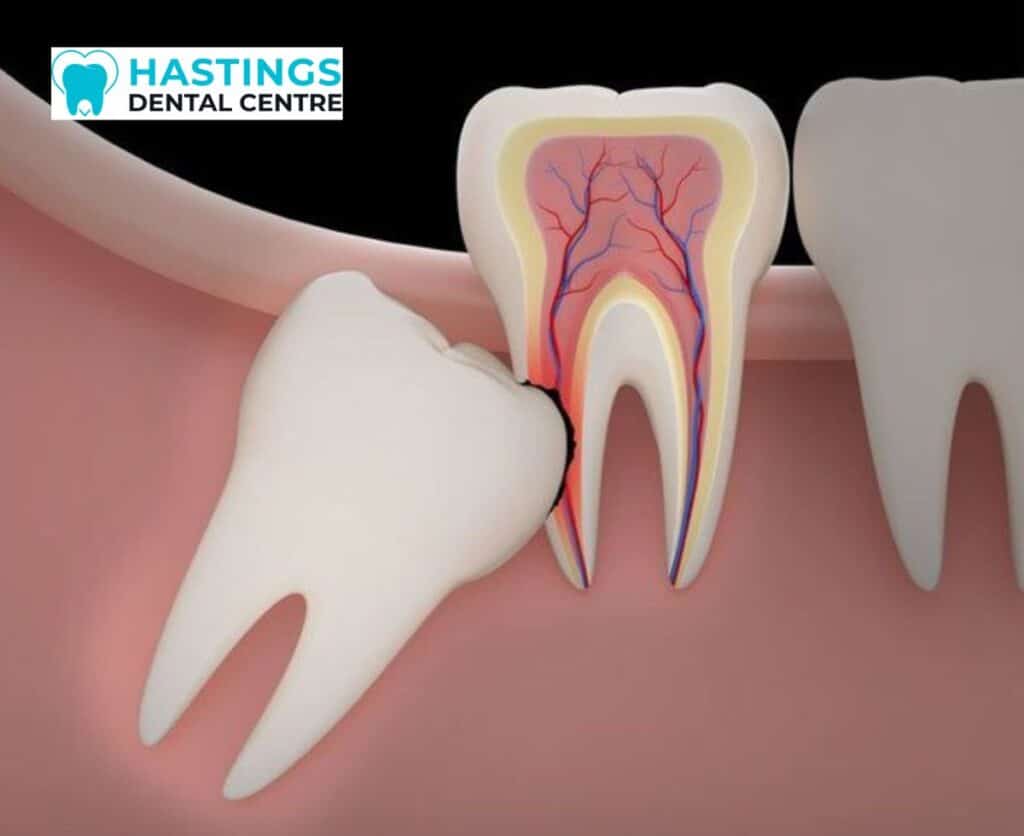
In most cases, inadequate space in the mouth does not allow the wisdom teeth to erupt properly and become fully functional. When this happens, the tooth can become impacted (stuck) in an undesirable or potentially harmful position. If left untreated, impacted wisdom teeth can contribute to infection, damage to other teeth, and possibly cysts or tumors.
There are several types, or degrees, of impaction based on the actual depth of the teeth within the jaw:
- Soft Tissue Impaction: The upper portion of the tooth (the crown) has penetrated through the bone, but the gingiva (gum) is covering part or all of the tooth’s crown and has not positioned properly around the tooth. Because it is difficult to keep the area clean, food can become trapped below the gum and cause an infection and/or tooth decay, resulting in pain and swelling.
- Partial Bony Impaction: The tooth has partially erupted, but a portion of the crown remains submerged below the gum and surrounding jawbone. Again, because it is difficult to keep the area clean, infection will commonly occur.
- Complete Bony Impaction: The tooth is completely encased by the jawbone. This will require more complex removal techniques.
Wisdom Tooth Extraction and its Potential Harmful Outcome
While not all wisdom teeth require removal, they are most often performed because of an active problem such as pain, swelling, decay or infection, or as a preventative measure to avoid serious problems in the future. If impaction of one or more wisdom teeth is present and left untreated, a number of potentially harmful outcomes can occur, including:
-
Damage to nearby teeth: Second molars (the teeth directly in front of the wisdom teeth) can be adversely affected by impacted wisdom teeth, resulting in tooth decay (cavities), periodontal disease (gum disease) and possible bone loss.
-
Disease: Although uncommon, cysts and tumors can occur in the areas surrounding impacted wisdom teeth.
-
Infection: Bacteria and food can become trapped under the gum tissue, resulting in an infection. The infection can cause considerable pain and danger.
-
Tooth Crowding: It has been theorized that impacted wisdom teeth can put pressure on other teeth and cause them to become misaligned (crowded or twisted). This theory isn’t universally accepted by all dental professionals, and it has never been validated by any scientific studies.
Common Risk Factors for Wisdom Teeth Extraction
As with any dental procedure, your dentist will want to initially conduct a thorough examination of the wisdom and surrounding teeth. Panoramic or digital x-rays will be taken in order for your dentist to evaluate the position of the wisdom teeth and determine if a current problem exists, or the likelihood of any potential future problems.
The X-rays can also expose additional risk factors, such as deterioration or decay of nearby teeth. Early evaluation and treatment (typically in the mid-teen years) are recommended in order to identify potential problems and to improve the results for patients requiring wisdom teeth extractions. Only after a thorough examination can your dentist provide you with the best options for your particular case.
Two of our articles go deeper: what happens when wisdom teeth are impacted and the benefits of wisdom tooth extraction.
Is Wisdom Teeth Removal Right for You? Exploring Your Options
Video: the best age to remove wisdom teeth
Between about 17 and 25 the roots of wisdom teeth are not fully formed and the jawbone is softer, so removal is usually simpler and healing faster. If you are older, a check-up with an x-ray (OPG) shows where your wisdom teeth sit.
Watch this video on Instagram (@hastings_dental)


Wisdom teeth removal is a common procedure, generally performed under local anesthesia, intravenous (IV) sedation, or general anesthesia by a specially trained dentist in an office surgery suite. The surgery does not require an overnight stay, and you will be released with post-operative instructions and medication (if necessary), to help manage any swelling or discomfort.
Expert Wisdom Teeth Removal at Hastings Dental Center
How much does wisdom tooth removal cost in Vancouver, and is it covered?
The cost of wisdom tooth removal in Vancouver depends on how many wisdom teeth come out and how each one sits: a tooth that has fully come in is a simple extraction, while an impacted tooth under the gum or in the jawbone needs a surgical removal. At Hastings Dental Center, the dentist confirms your cost after the exam and x-ray. Wisdom tooth extraction is covered oral surgery under the Canadian Dental Care Plan for eligible patients, and with our no-gap CDCP billing you are not billed the difference for eligible covered treatment.
What wisdom tooth removal takes
- Exam and x-ray: the dentist checks your wisdom teeth and the teeth next to them and takes a panoramic x-ray (OPG) to see where each tooth sits and whether it is impacted.
- Simple or surgical: a tooth covered only by gum is easier to remove than one partly or fully held in the jawbone, which needs more complex removal techniques. This, with the number of teeth, sets your price.
- The visit: the area is numbed before the tooth is removed, and the surgery does not require an overnight stay.
- Recovery: you go home with post-operative instructions, and medication if necessary, to help manage swelling or discomfort. For the first days, see soft foods to eat after a tooth extraction and coffee after wisdom tooth removal.
- Timing: between about 17 and 25 the roots of wisdom teeth are not fully formed, so removal is usually simpler and healing faster.
Other insurance and financing: many workplace dental plans cover part of an extraction, and our team helps you check your benefits. Flexible financing is available through iFinance Canada.
Is a wisdom tooth swollen or painful right now? See our emergency dentist page and sore wisdom tooth remedies. Book a wisdom tooth assessment at 2420 East Hastings Street in Vancouver, or call (604) 251-5993.